
Well, 2026 is off and running! On January 1st, our second monarch butterfly was born. I am not exactly sure of the time, but when I awoke in the new year, there she was. If I smoked, I would have lit up a cigar!
But wait, you need to hear how my lovely partner and I got into the ‘Backyard Monarch Metamorphosis’ business.
The story actually begins 10 years ago, when unknown to me, milkweed seeds were planted in several locations in our yard by a female ‘Elvish‘ gardener. As monarch butterflies only lay eggs on milkweed plants, as the plants matured, we expected to find monarch caterpillars crawling all over them. But as each year past, there were none, until 2025!
Here is a video of what the caterpillars look like munching away on milkweed.
Notice the caterpillars protective coloration, a visual warning to predators telling them to stay away. In addition to their bright colors, as the caterpillar eats the milkweed it stores the plants toxin, which in turn makes them poisonous to many predators.
In spite of these ‘built-in’ deterrents, only 1 in 10 monarch caterpillars survive to become adult butterflies.
When we first noticed that we had caterpillars, we could only find three of them, even though a female butterfly usually lays hundreds of eggs.
We excitedly watched those three like they were our own offspring. The caterpillars grow exceedingly fast, and each can eat up to twenty milkweed leaves a day!
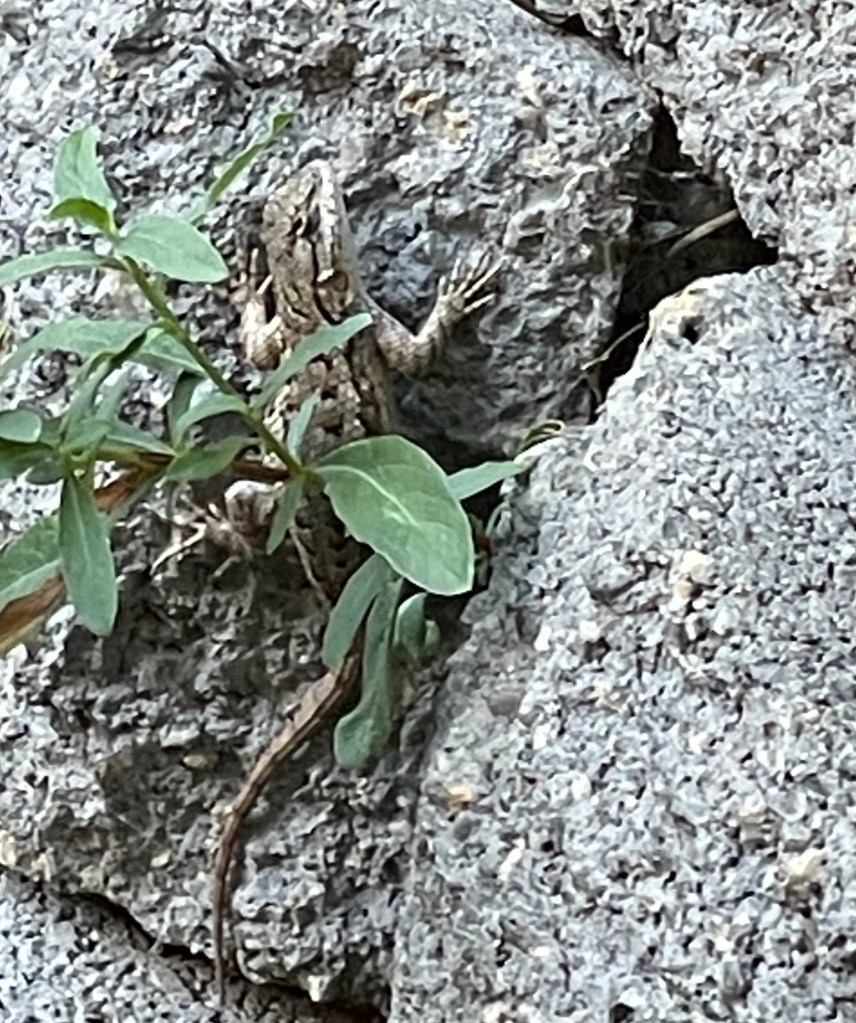
One morning, I could only find one caterpillar. We searched and searched, and finally assumed that a predator, likely a lizard (the toxin does not affect them), ate the other two. At that moment, we decided to build a cage and raise the last remaining caterpillar indoors.
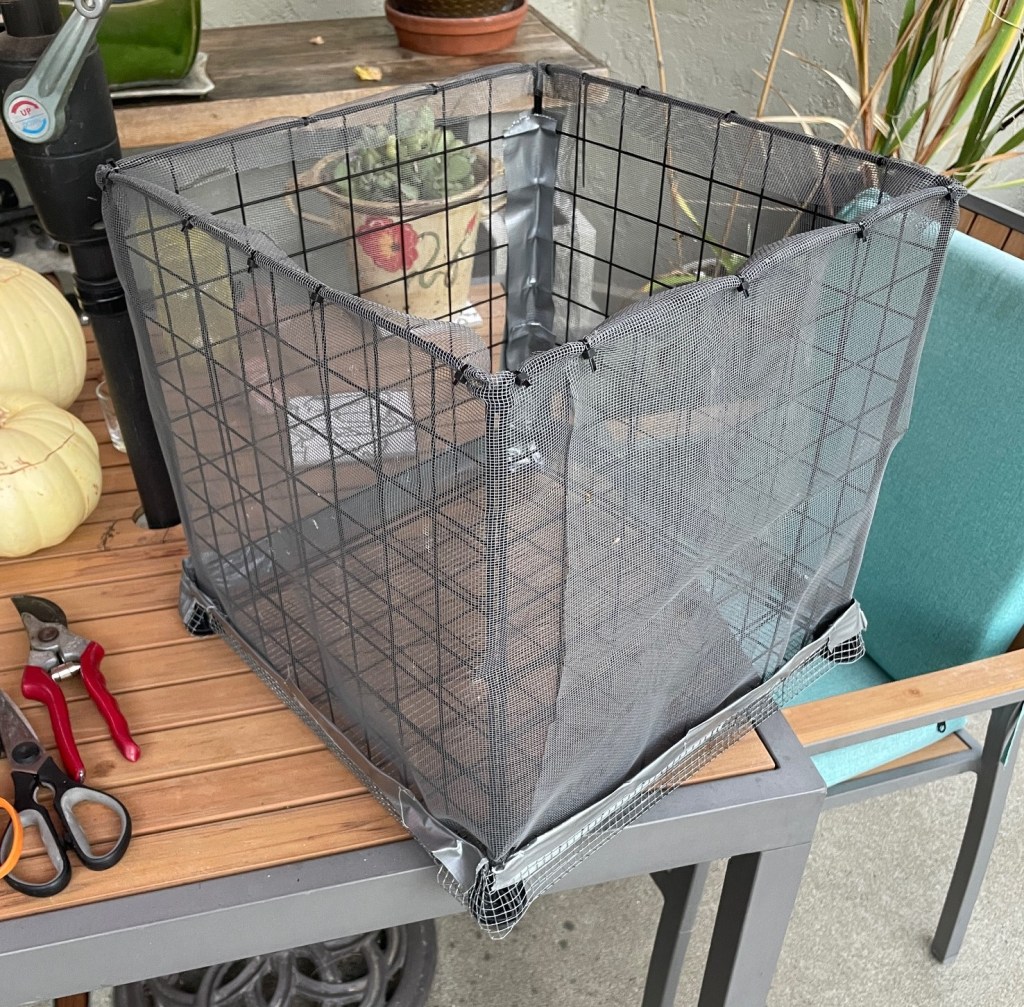
We read up on all the ‘things’ one needs to do to raise the caterpillar. After about five days, the caterpillar climbed to the top of the cage, crawled around, attached itself to the mesh, and then made a ‘J’ shape, as it hung from the top of the cage. (Note: Here is a picture of a monarch caterpillar that went into a J shape in our backyard. We found out about two weeks later that there were many more caterpillars to be found on the milkweed.)

They remain in that ‘J’ shape for about 2 to 3 days. After which they begin to wiggle, shed the caterpillar skin, and develop into an incredibly beautiful gem-like, green chrysalis. Here is a picture of a monarch chrysalis that developed in our backyard.
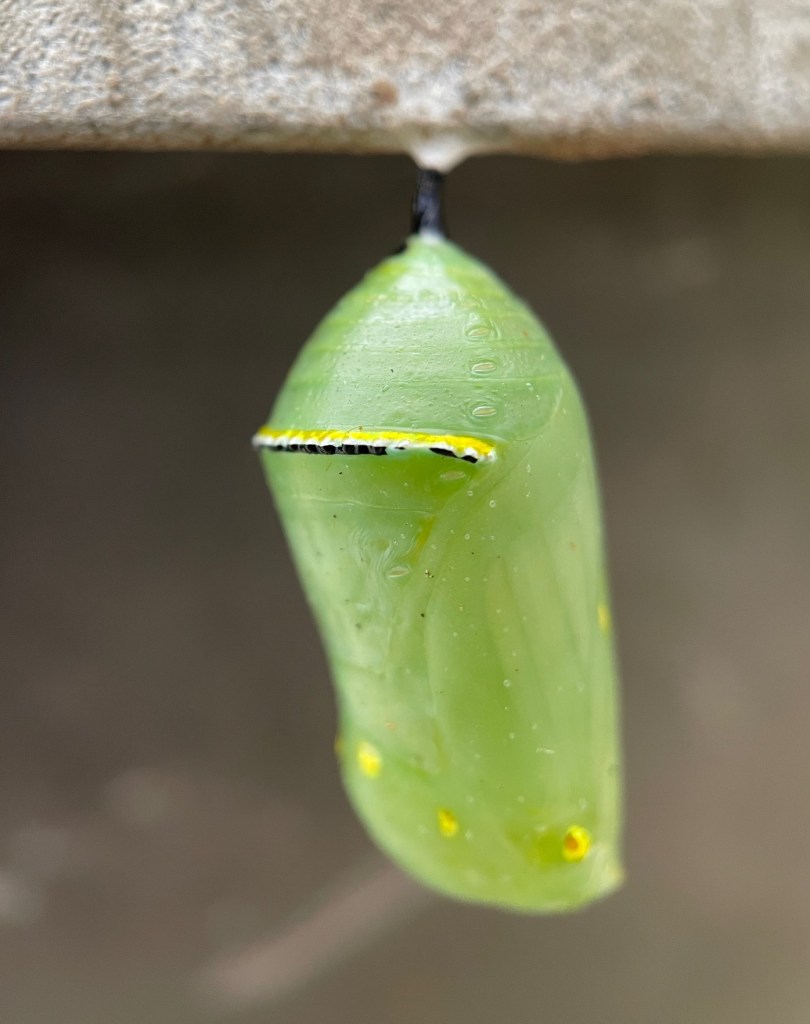
The chrysalis stage lasts between 8 to 14 days. However, we have found that it can go much longer, depending on light and temperature. This is where the ‘magic’ or metamorphosis happens. The caterpillar now liquifies in the chrysalis, eventually emerging as a monarch butterfly.
Okay, this is truly like a science fiction movie! Scientists are still trying to figure out what God (or nature if you prefer) has already created!
At some point during that time, the chrysalis will begin to change from the bright green color, becoming a darker green and then black. During the blackening stage, we could see a bit of the orange, black and white butterfly wing, through a little ‘porthole-like’ window in the now black chrysalis.
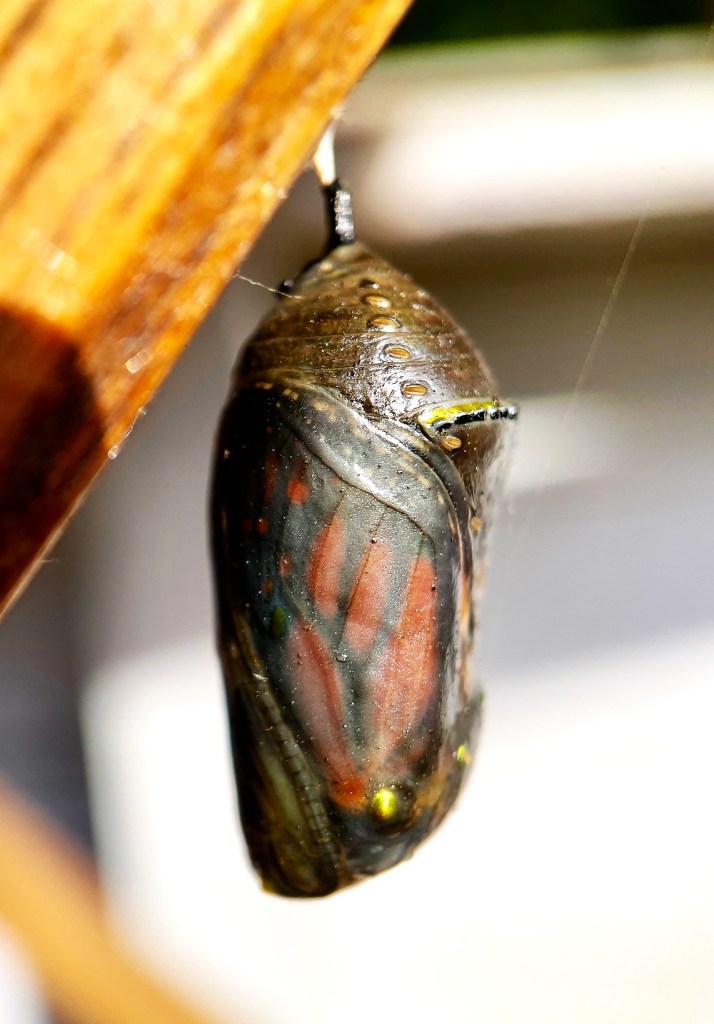
Within a short time of this stage, the butterfly emerges. It happens very quickly. Just a minute or so, and the butterfly emerges, with a swollen abdomen, and small, wet-folded wings. The butterfly clings to the remaining chrysalis, now clear, feeding on it, while its wings begin to unfold, dry off and expand fully. This can take between 3 to 5 hours.
If all has gone well, and believe me, many times it does not, the butterfly will flap its wings repeatedly, signalling that it is ready for release.
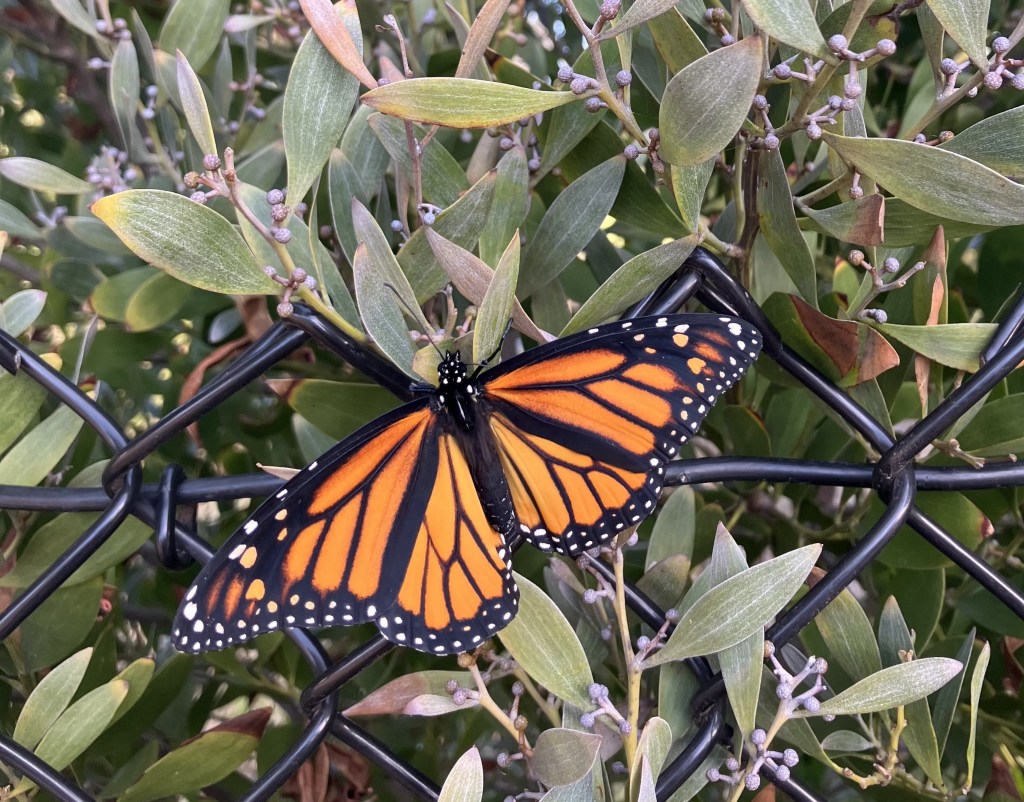
We released our first monarch on the coast in Northern California, at a monarch resting preserve. Hopefully, he made it. We will never know.
As previously mentioned, about two weeks after the release, we found about 20 more caterpillars. We were super excited, but at the same time overwhelmed. We did take in 3 more caterpillars to raise indoors, but the others we left on their own. To date, we have about 7 in chrysalis stage in the yard. Looking forward to seeing them fly off!
Once there are no more caterpillars on the milkweed, we will cut it all back. Next year, we will cut it back in September, so that no monarch butterflies will be tempted to lay eggs. Winter is not really an ideal time to raise and release monarchs.
We learned a lot, and are looking forward to more monarch adventures!
 Mr. G's Mind