Couch and Chair Recovery Process

A special friend of mine was given some mid century modern living room furniture – a couch and two chairs. They were in very good shape and only needed some minor wood repairs, which I completed. As you can see, one can never have too many clamps!

The last time the cushions were recovered was likely in the late 1980’s or early 1990’s, based on the fabric, but still in pretty good shape.

My friend, who just so happens to be an excellent seamstress (no, not for the band), decided that she wanted to recover all 10 cushions. This was a very challenging task, as she had never recovered furniture before.

If you plan to do a job like this, she recommends viewing http://www.sailrite.com. She studied the site’s videos over and over again. In fact, she purchased the foam for the cushions from Sailrite.

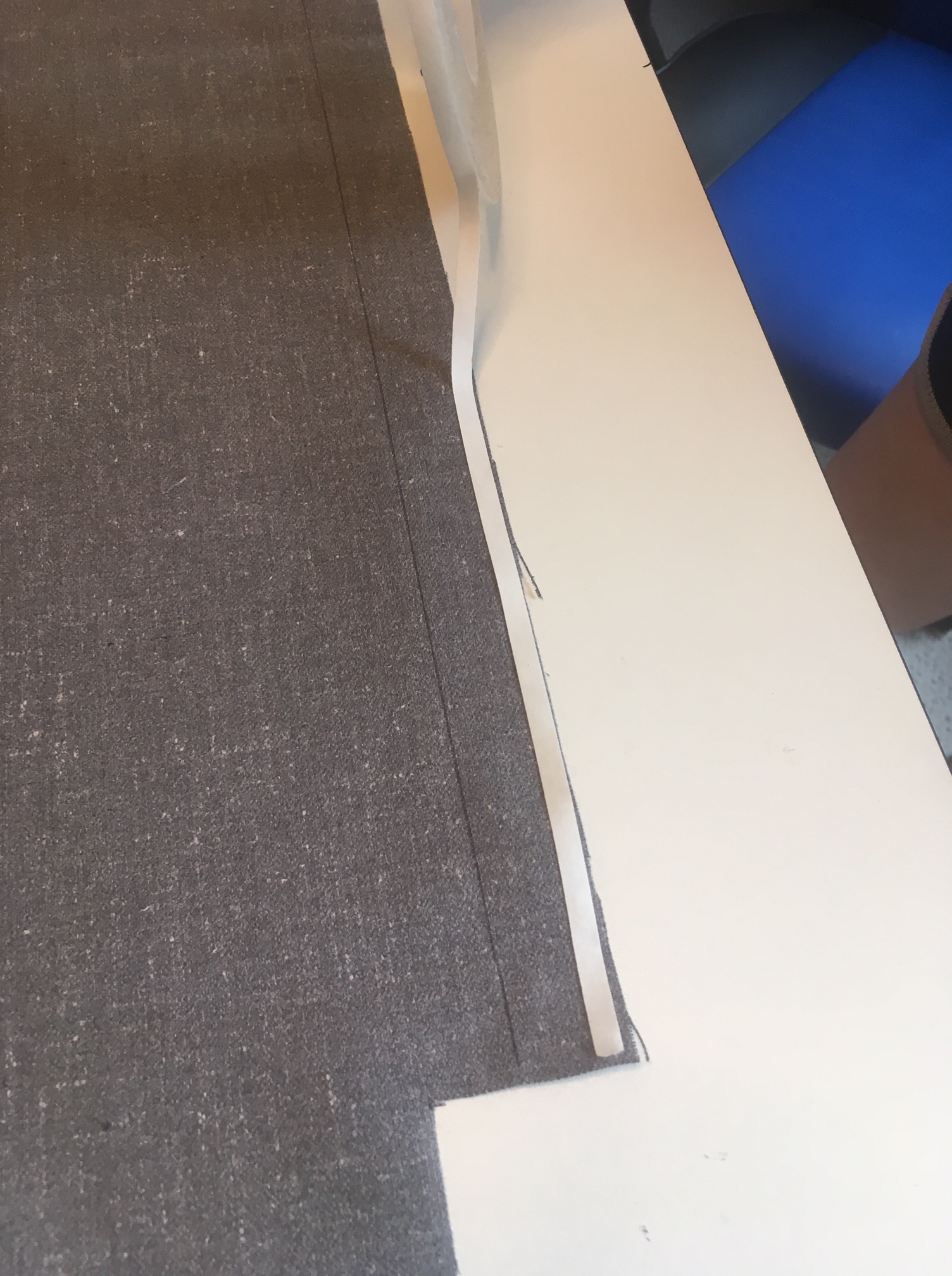
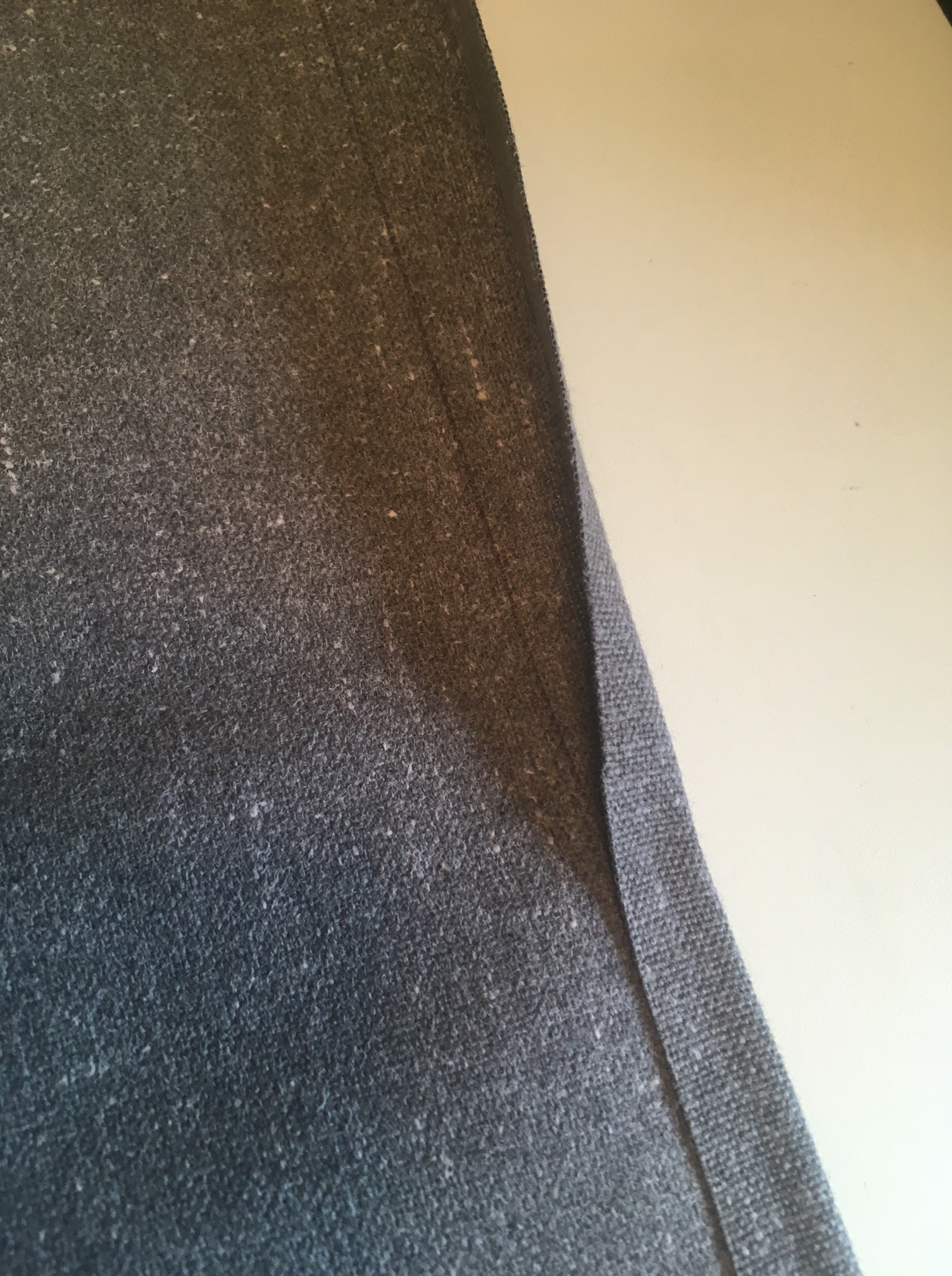
Her top tips – use adhesive basting tape shown below. She said it is awesome stuff! Also, use the medium foam. The firm foam is too dense for house furniture.
Okay, so how do I fit in on this post? I thought I was done when I completed the basic wood repair. Well, not so. I was given the task of cutting the foam. It might sound easy, but it was not! The foam is fairly dense, and is 4″ thick.

The Sailrite video made it look easy with their special electric knife. It can also be done with a kitchen bread knife, which fortunately I had one.

The cut has to be very straight. If not, when the cushion cover is put on, the angled or choppy cut will show through.

My first thought was to sandwich the foam between two pieces of wood, making the thickness about 1″. Wrong! If you do this it is easy to cut, but the the foam edge will be severely curved.

I decided I needed a guide on the underside of the foam. This would ensure that the knife remained straight while cutting.

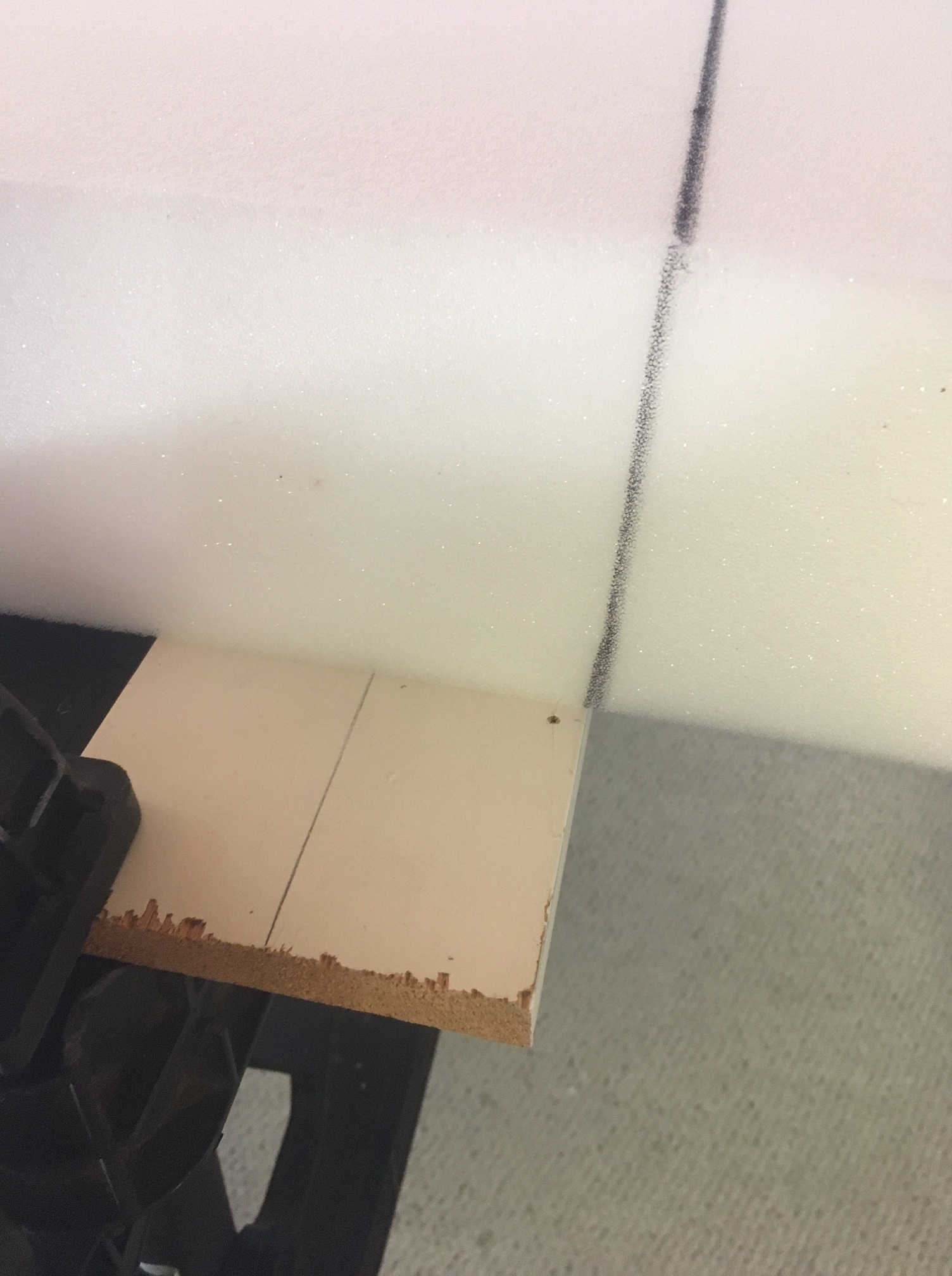
Use a flow tip pen and clearly mark your cuts on the top and edges of the foam. Go slowly! Check often that the blade of the knife is flat against the bottom wood edge. It’s a slow process, but it works.

Well, how did it all turn out? Absolutely fantastic!

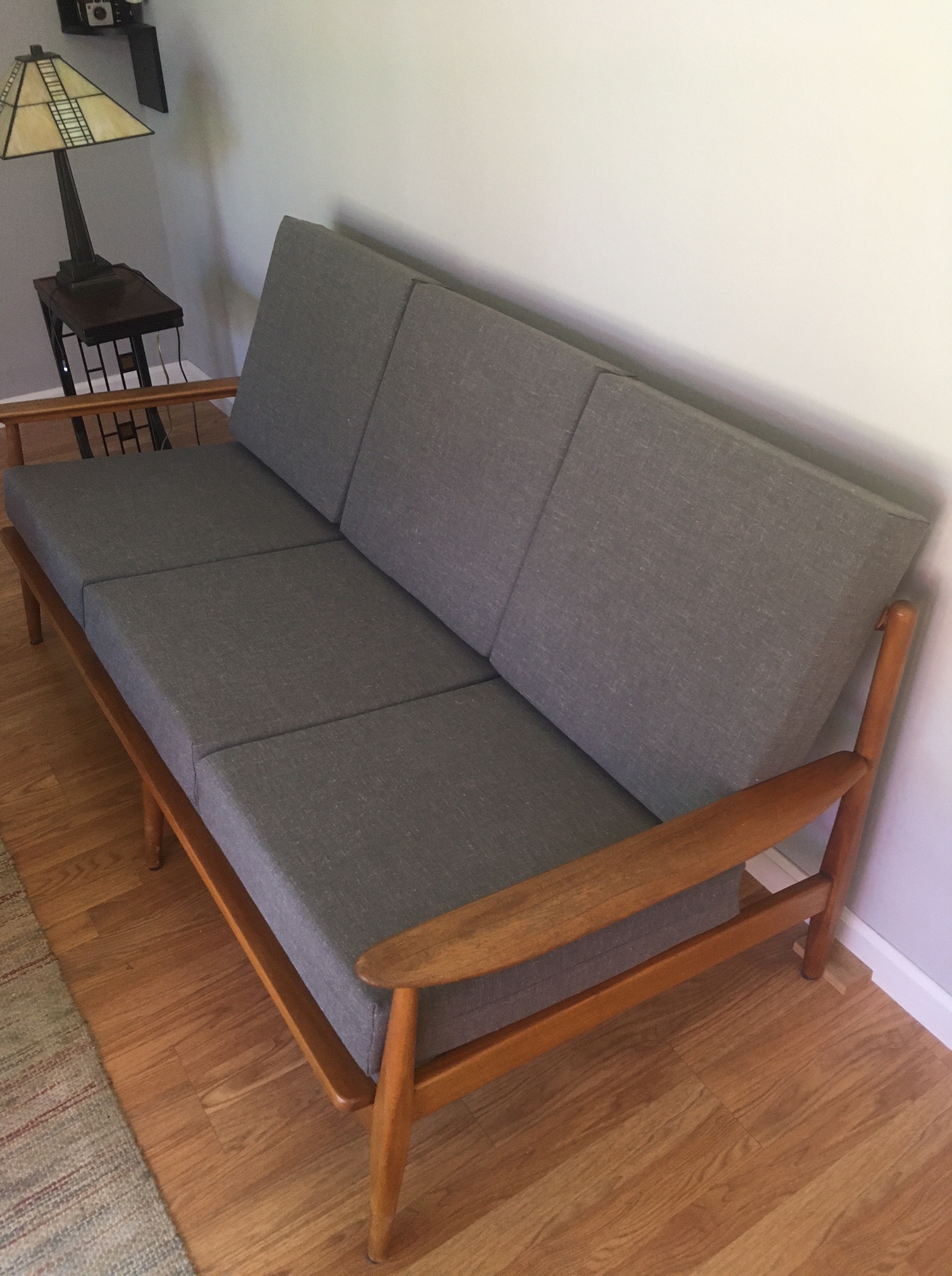
I love the look, and she saved at least $2000.00 doing it herself. Great Teamwork!

She does beautiful work. Maybe she really was a seamstress for the band?

.
Cabana Skylight Project

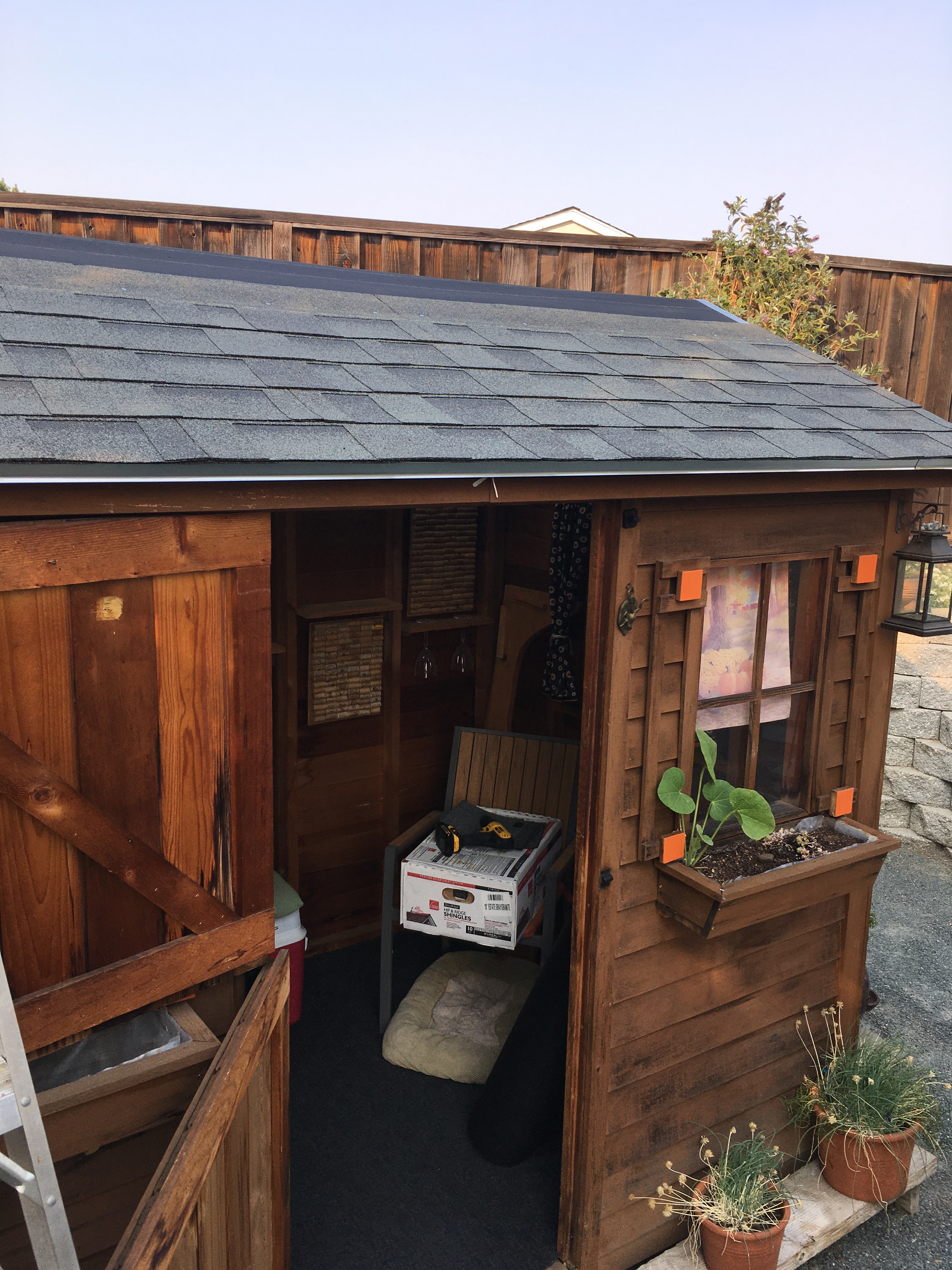
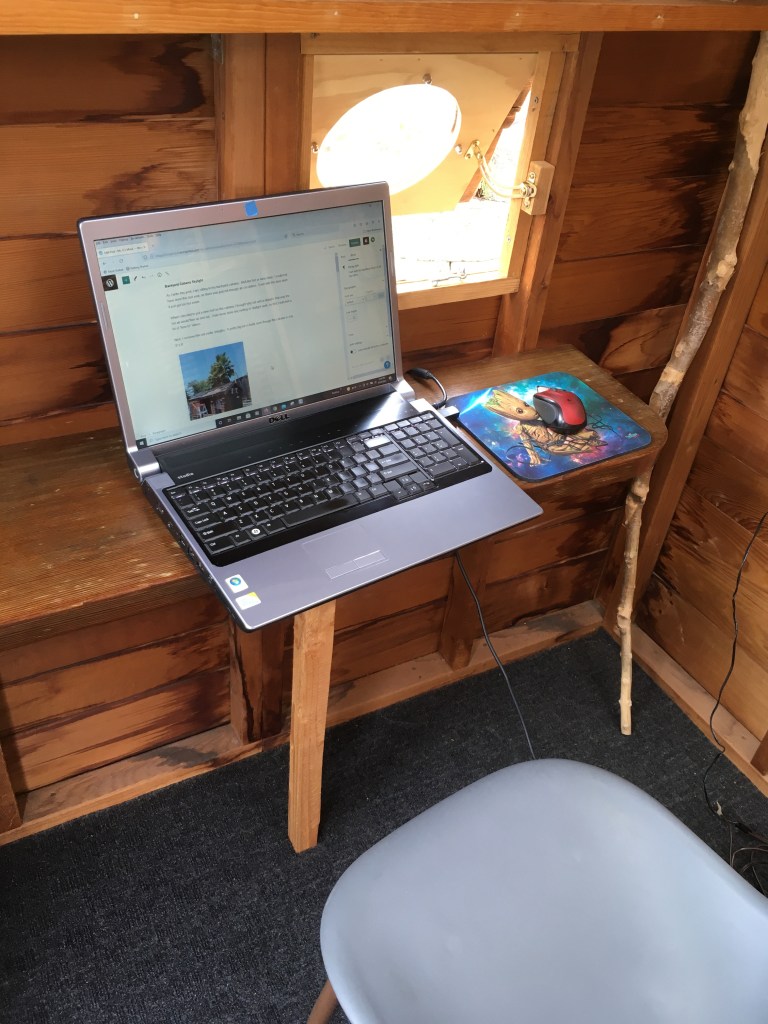
As I write this post, I am sitting in my backyard cabana – also known as the fort or wine shed. I could not have done this last year, as there was just not enough air circulation. Even with the door open, it just got too hot inside.

When I decided to put a new roof on the cabana, I thought why not add a skylight, that way the hot air would flow up and out. I had never done any roofing or skylight work, so first I watched a lot of “how to” web videos.

Next, I removed the old cedar shingles. A pretty big job in itself, even though the cabana is only a 6′ x 9′ space.

My first idea was to raise the angle of the back sloped roof, so that I could add clerestory windows. I tacked up a couple of pieces of wood to get an idea of what the new roof line would look like. I decided that it was going to be too much work, and might look too tall as well.

Once the back side of the roof shingles were removed, I tore off the old tar paper. I decided it was a good time for a break, so I layed down inside the cabana and came up with a simple idea.

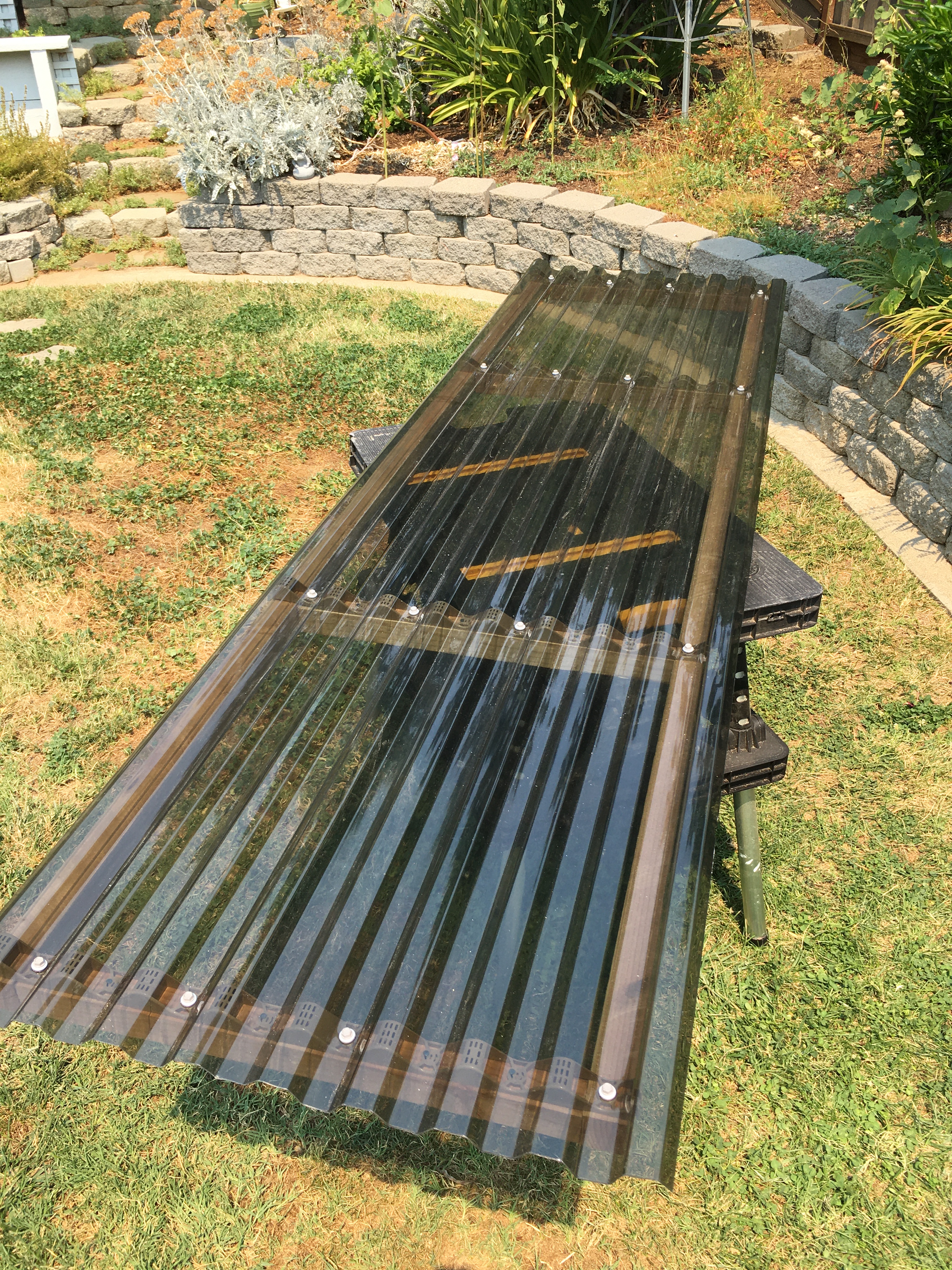
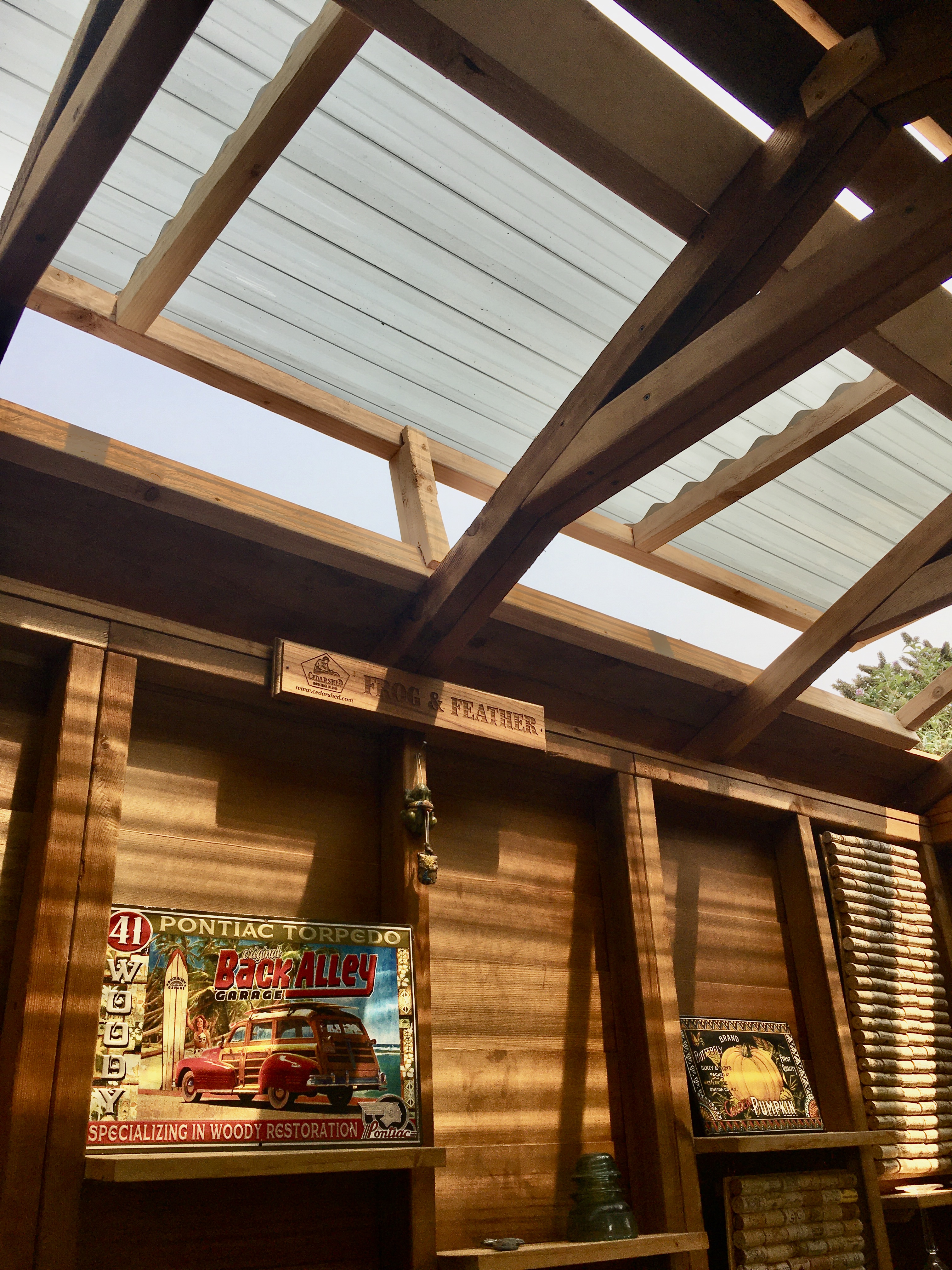
Why not use a piece of tinted 2′ x 8′ corrugated plastic, with a frame and hinges so that it could be opened and closed. Seemed so much simpler to me.

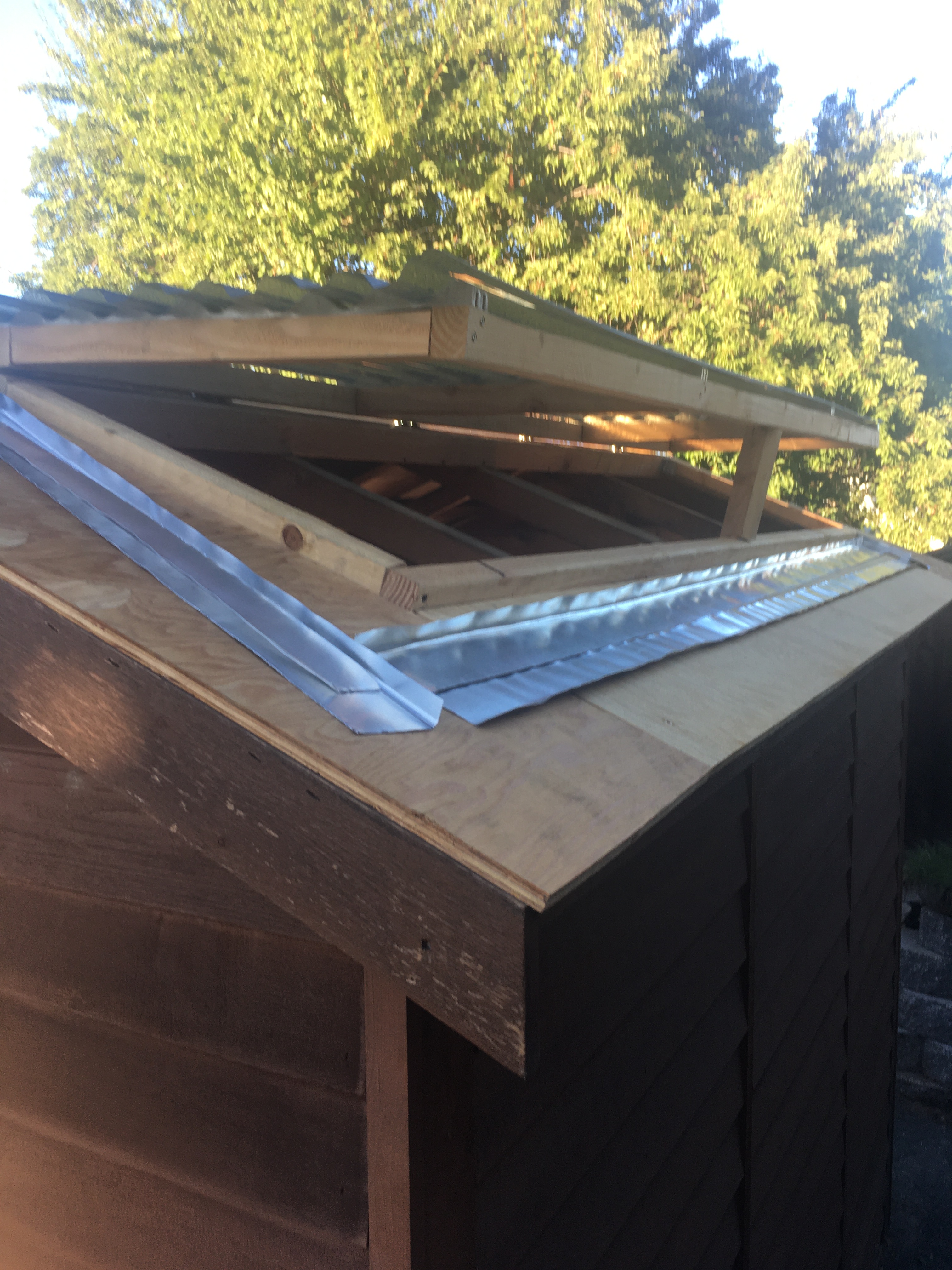
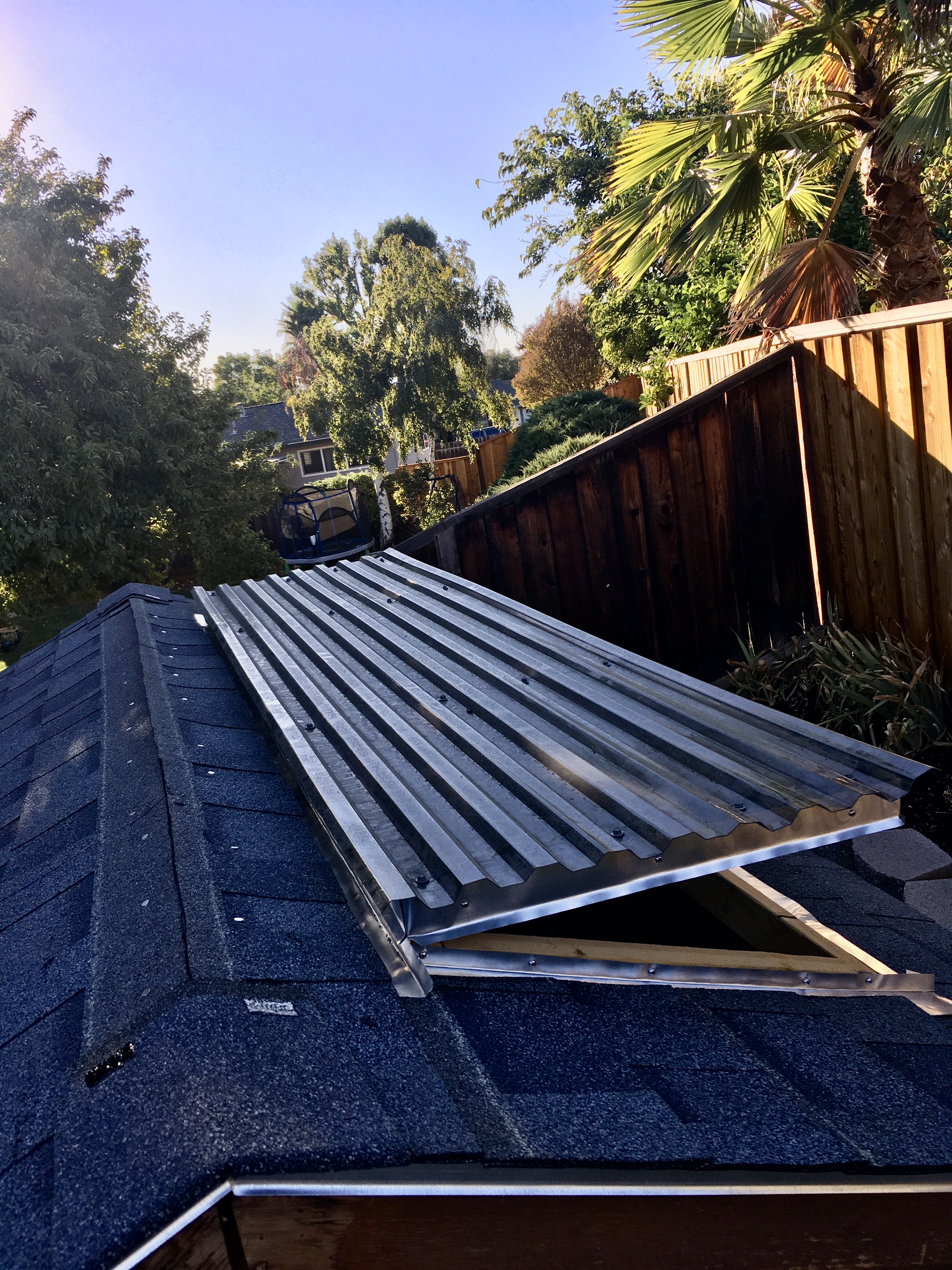
Below, I constructed the skylight frame and attached it to the roof. I used a piece of scrap with notches in it to prop it open. It looked great to me, half the roof opens up! Might make a great observatory for night sky viewing too (hmmm, good idea). Plus, you could not even see the skylight from the front of the cabana. Little did I know, things were going to get tougher.

Since I had removed the shingles, I had to sheath the roof with plywood. That job was not too difficult, but the next task was much more challenging.

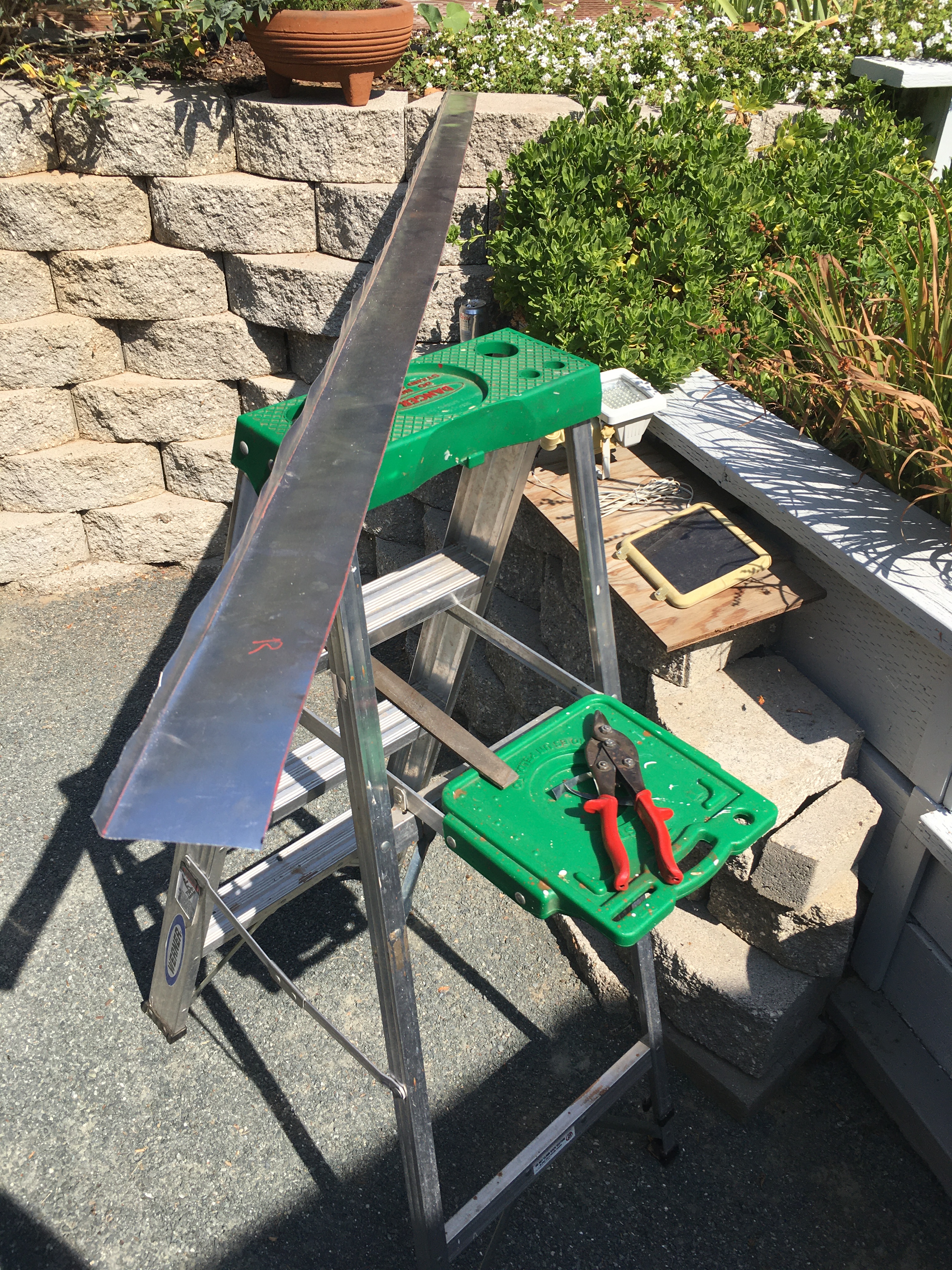
Videos always make things look easy. Since I now had a skylight, I had to flash it with metal to prevent water from seeping in. I bought some rolled aluminum that I would be able to cut with tin snips and bend using my hands and a piece of wood. Not a simple task, and it took me a couple of days to get it all done.

Even after the flashing is made, you have to install it so that it underlaps at the top joints, and overlaps at the bottom joints. In doing so, the rain will not seep in. Very tricky, so watch the web videos over and over.

Next, I added the roll roofing and the asphalt shakes. There is a specific method for putting the shakes on. It’s not really hard, but you have to do it as specified. The shake packs that I purchased had instructions on how to apply them. Again, watch videos as well!

Below, all the roof shakes are on and I am just finishing up the the ridge cap shakes. You can clearly see the flashing around the skylight.

Below was the first rainstorm. It really sounded amazing inside! I had one small leak, but tracked it down and fixed it with a bit of tar.

This was a big job for me and took quite a bit of planning and work. Not so sure I’d want to do it again. However, I am so happy that I did do it and now use the cabana almost every day.

It’s a wonderful, light-filled space for creating new ideas, sipping wine or both – usually both!