
Several years ago, I decided that it was time to buy a Morris chair. I’d seen them in my craftsman books and magazines, and always wanted one.
However, most of the chairs that were in my price range were made overseas. I wanted one that was made in the USA. Of course, those were all pretty pricey.
Plus, I always thought it would be cool to sit in a chair that I made. There was only one problem — these chairs are made of oak, you need a nice table saw and other specialized tools, which I did not have.
I decided that I would see if I could find a precut kit, that required sanding, glue-up, and staining.
After looking around, I contacted a woodworker who actually taught a class on making a Morris chair. I thought about taking the class, but by the time I flew across country, paid for a hotel, meals, and the course, I could have afforded to buy the pricey USA made chair.
Instead, I asked the woodworker if he’d make me a kit. We settled on a price, and several weeks later a fifty-plus pound box showed up.
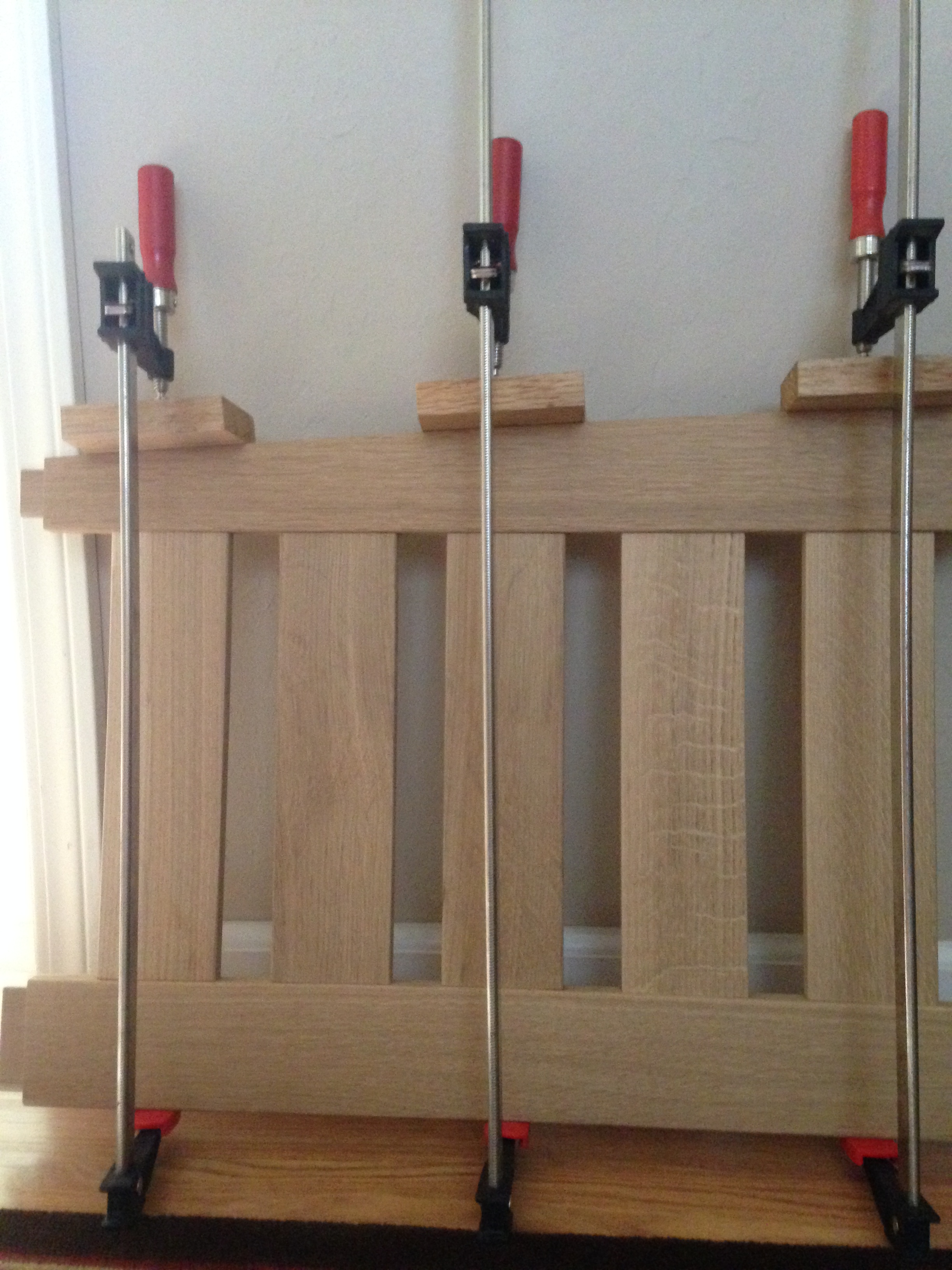
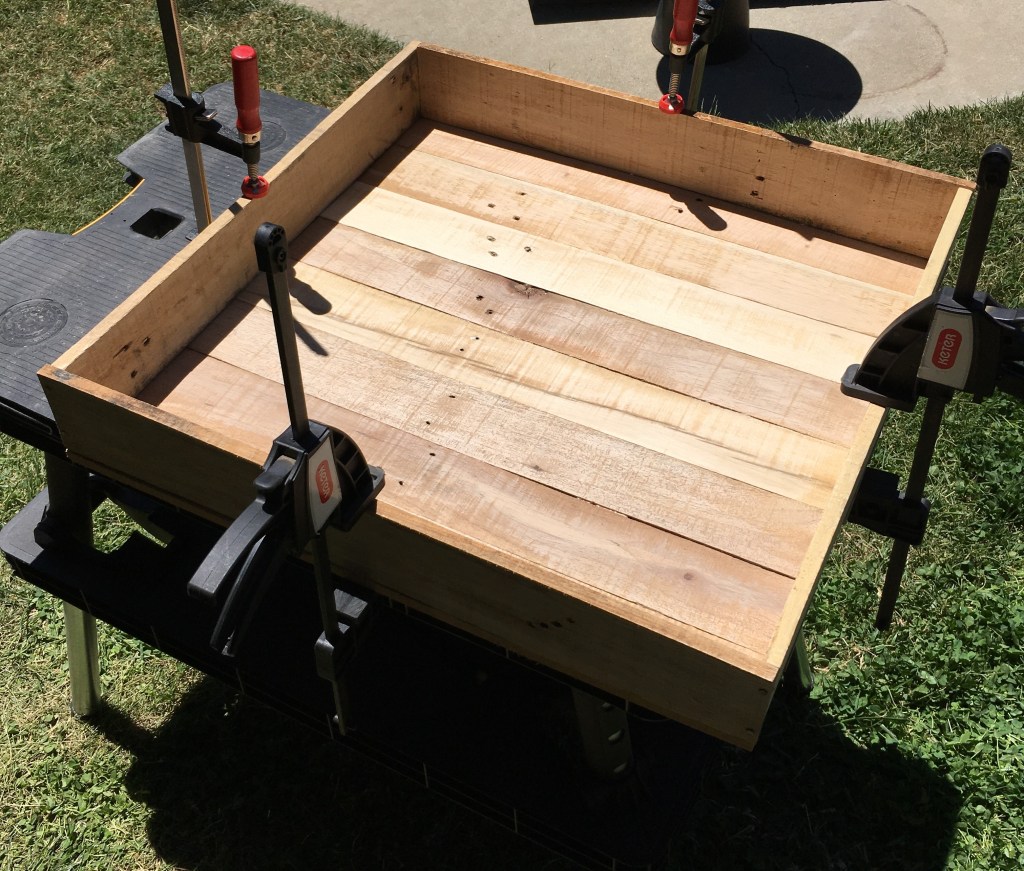
I began by sanding, lots of sanding with different paper grits. Once sanded, the assembly began. I had to invest in a number of wood clamps, but I have used them many times since.
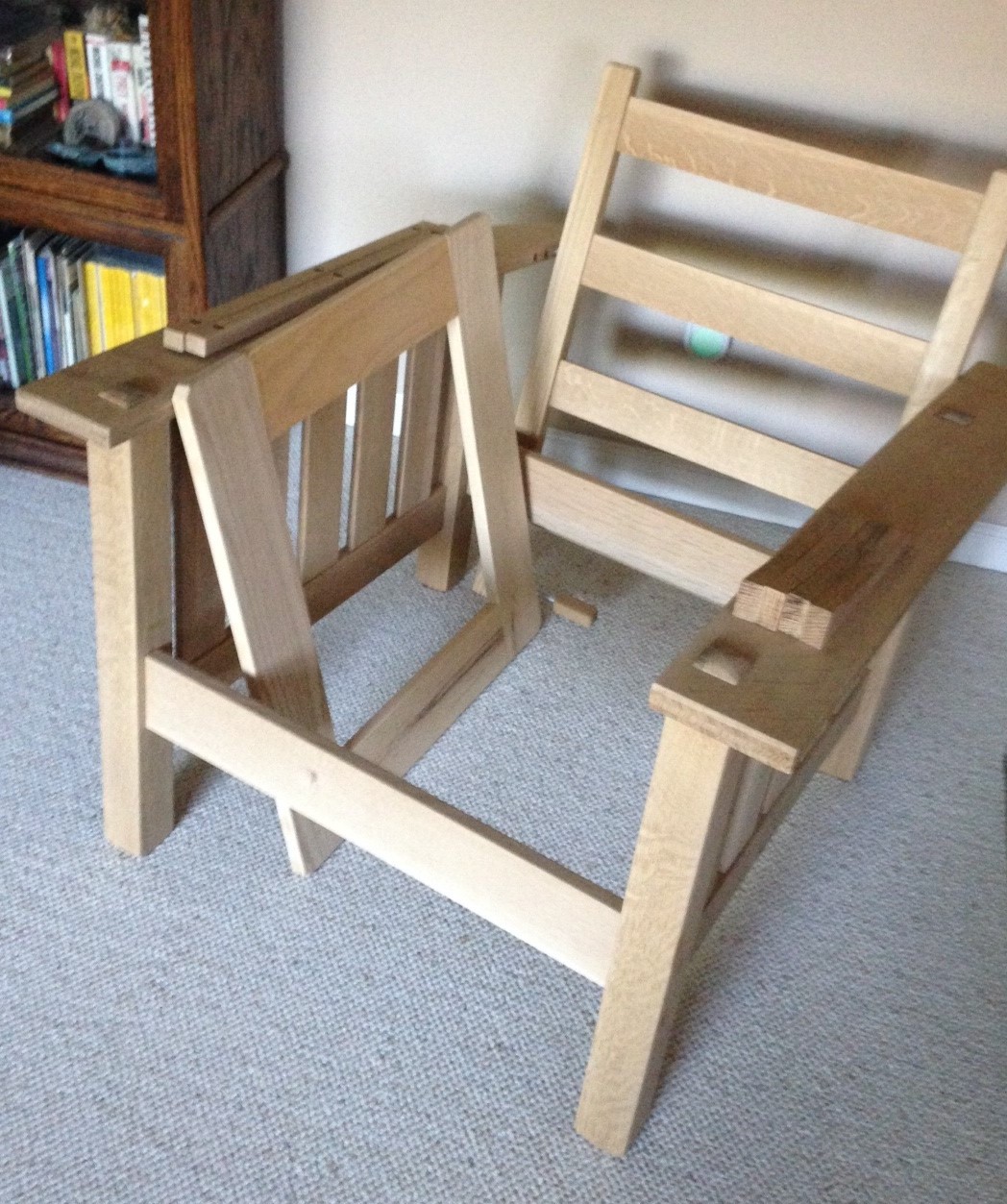
The pictures below, give you a pretty good idea of the assembly process.

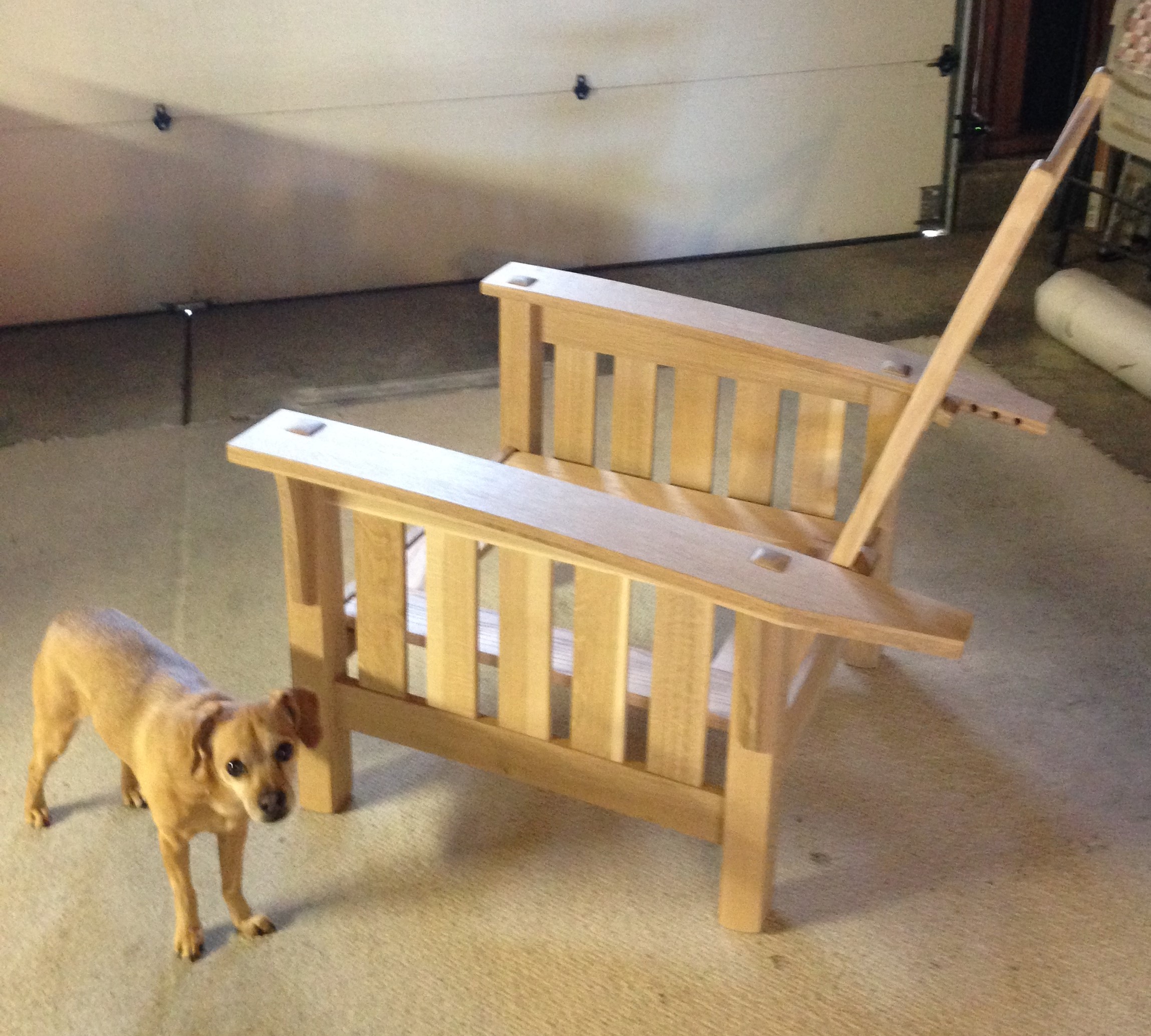
Here is the chair completely glued up. Oh, the supervisor had to come over and inspect my work.
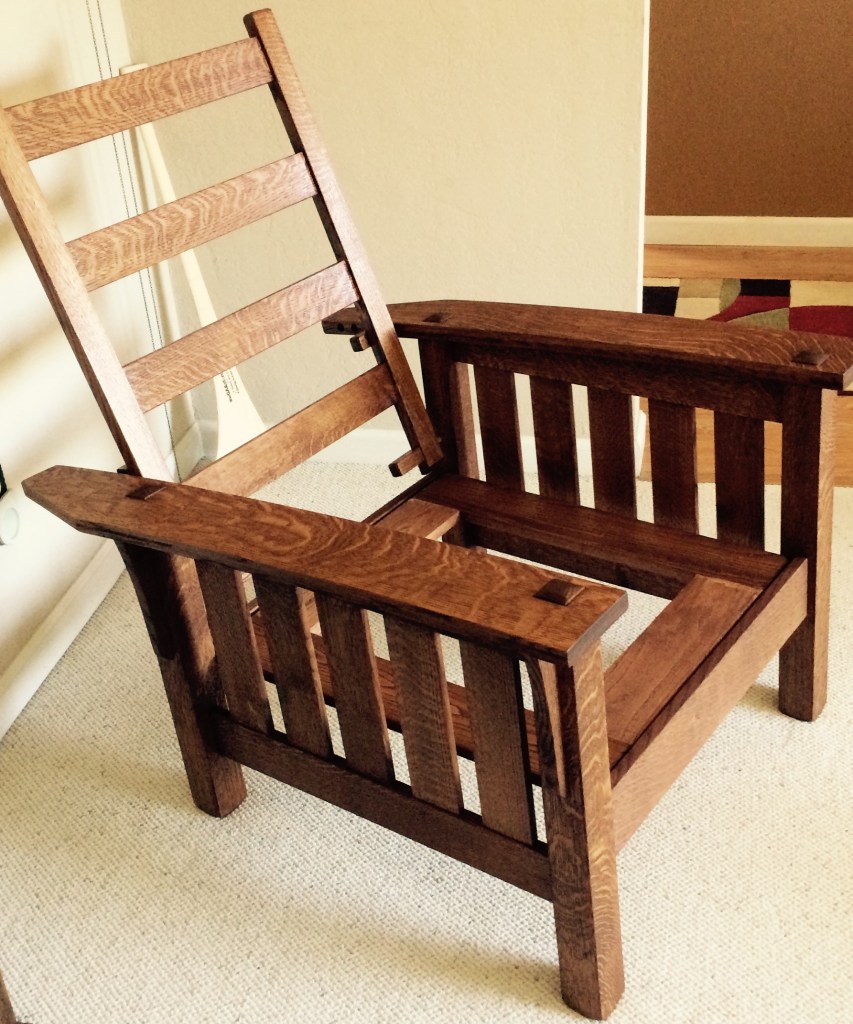
There is a lot that you can do in staining a project. I simply wiped on a red oak stain and later a clear satin finish.
Finally the cushions, not cheap, but I found a local upholstery shop to do the job. It turned out great!
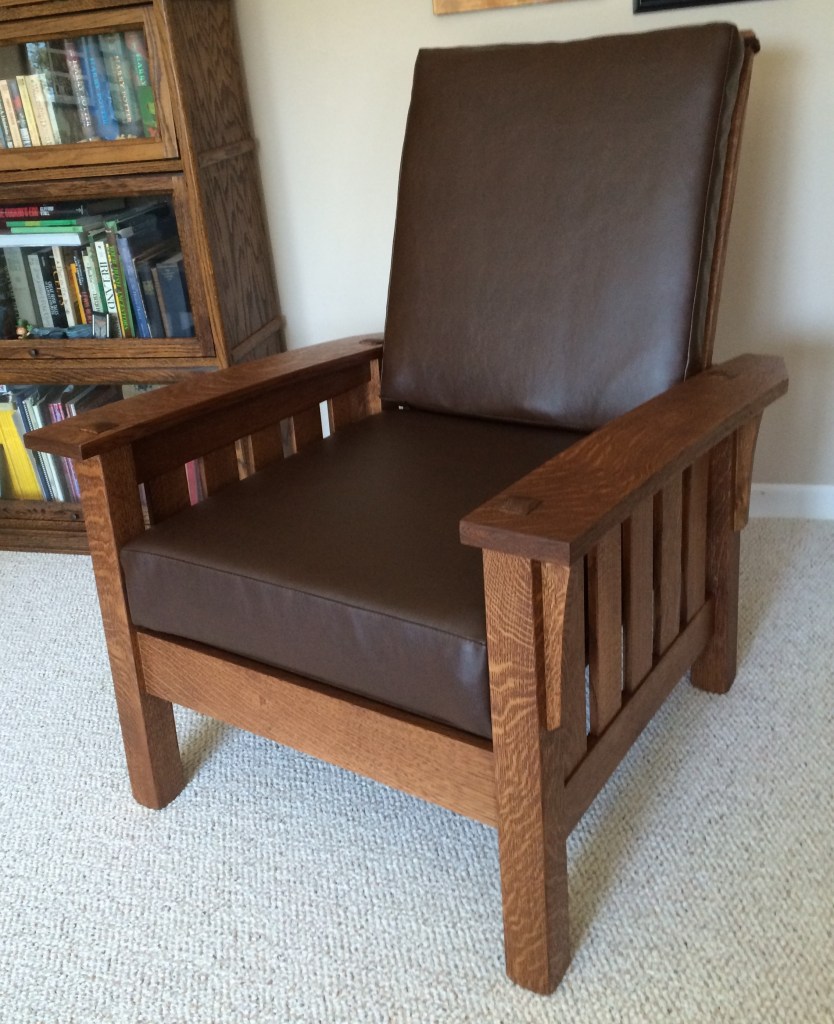
Looking back on the project, I am glad that I did it. Today, there are more purchase options that are reasonably priced, but if you want to get more involved, the kit is a fun way to go.
 Mr. G's Mind