Cuttlefish Comm Board

Communicating with animals is something that has interested me for quite some time. Whether it’s dolphins, chimps, seals, elephants, whales or wolves – I am interested in what they have to say.

Not an easy subject to study unless one happens to be an academic or a scientist. However, I have an idea to study animal communication from my garage to a local aquarium.

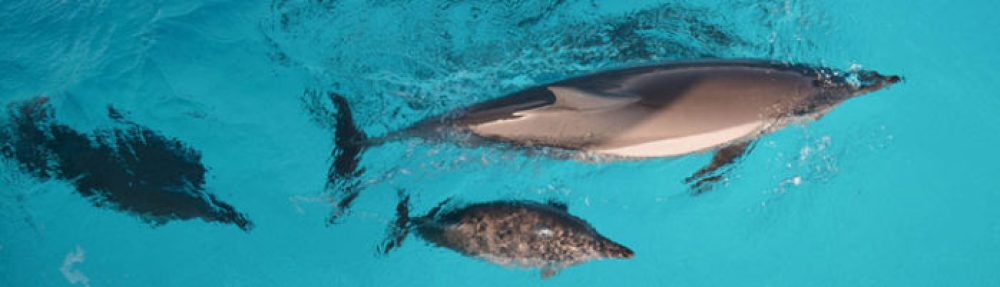
I plan to learn more about how the cuttlefish communicates. Cuttlefish belong to the class Cephalopoda – same as the octopus, squid, and nautilus.

Cuttlefish communicate primarily with their skin cells. They have specially adapted cells (chromatophores) that can change color, pattern and shape. These displays communicate to other cuttlefish various behaviors – aggression, mating, territory, and more.

Here’s my idea: build a cuttlefish communication/display board that is equipped with a programmable LED display strip. The LED strip can be programmed to simulate known cuttlefish displays (very rudimentary), as well as present new ones to see how the cuttlefish behaves. I am not even sure if it will work?

Where would I test this – at an aquarium with cuttlefish of course. I’d have to obtain permission, but I would wear all dark clothing (less likely to be seen in the background) with the cuttlefish comm board hanging about chest high. The LEDs would be controlled via an app on my phone.

Okay, crazy, but so interesting to really try it.

This is a long-term project. At this time, I have the board cut out and the addressable LED strip.

I am working on obtaining an Arduino kit (microcontroller and software) so I can program using my PC (with help) the LEDs to display in specified colors, patterns, and rates. First, I will emulate known displays and then create some mixed displays.

Once I have a functional prototype, I will contact a couple of local aquariums to set up a demo.

I hope that I can clearly communicate to them what I am trying to do. Do you think that they will understand?

Smoked Cheddar Cheese

This is my first attempt at smoking cheddar cheese. In fact, any type of cheese. I learned a lot and will share my experience.

First, pick a cool day or do it very early in the morning. When smoking cheese it’s important that the smoker does not get hotter than 80 or 85 degrees max. If it does, the cheese will begin to melt. I suppose that is why it is called “cold smoking.” I know that now – my cheese melted.

I use a Weber barbecue to smoke. Please refer to my post Smoking Set-Up on the Barbecue.

To keep the temperature low, use only 3 or 4 briquettes. That is all you need to begin. Heat is only needed to make smoke from the wood chips.

I used a thermometer to monitor the temperature. This one begins at 200 degrees. It’s all I had, so I just estimated – pretty useless.

Use a hard cheese. I used a small block of cheddar and placed it on a piece of aluminum foil. Once the briquettes are grayish-white, add some wood chips. I used hickory. Let the smoking begin!

The cheese should be smoked approximately 2 hours. At about 45 minutes into the process my cheese began to melt. The outside temperature was 82 degrees, inside temp was about 85 degrees. Too hot! So, I added some ice cubes on the edge of the foil.

I let the smoking go on for about 15 minutes more and removed the cheese. It now looked a bit like a tiny loaf of orange-colored bread.

I placed the smoked cheese into the refrigerator to chill. Then placed it into a plastic bag. I removed as much air as possible and sealed the bag.

The cheese needs to sit for two weeks to allow the smoke to permeate throughout the entire block.

I’m excited to give it a taste even though it only smoked for an hour. I plan to pair it with an inexpensive Cab wine and some sliced apples. I’ll let you know in two weeks!