A number of years ago, I was on a team of support engineers that won our company’s international vision award. A nice honor!
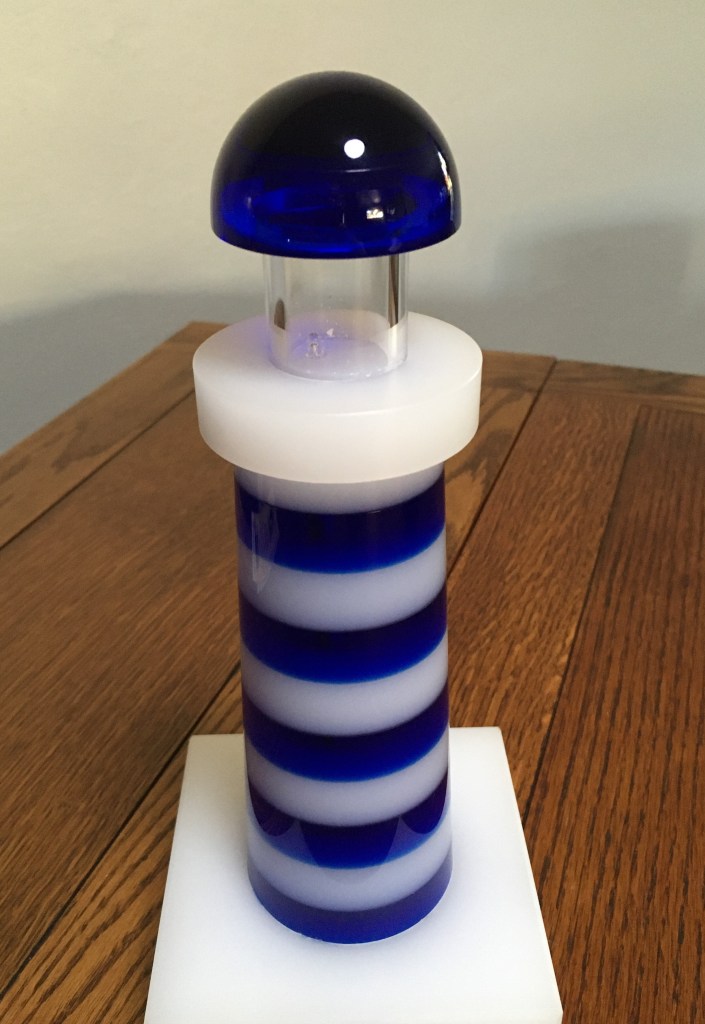
Part of the award, was a trophy that resembled a stylized lighthouse. As a vision company, we literally made products that helped people to “see the light.”
I fully expected that the lighthouse award would actually light up – but it did not. Well, the award went on the shelf and there it remained for years.
So, a lighthouse without light is simply a ‘dust catcher.’
Just before I left the company, I decided that the ‘dust catcher’ award needed to “light up.” I asked a friend if he could ‘mill out’ the bottom of the award, and drill a hole up through the center for me.
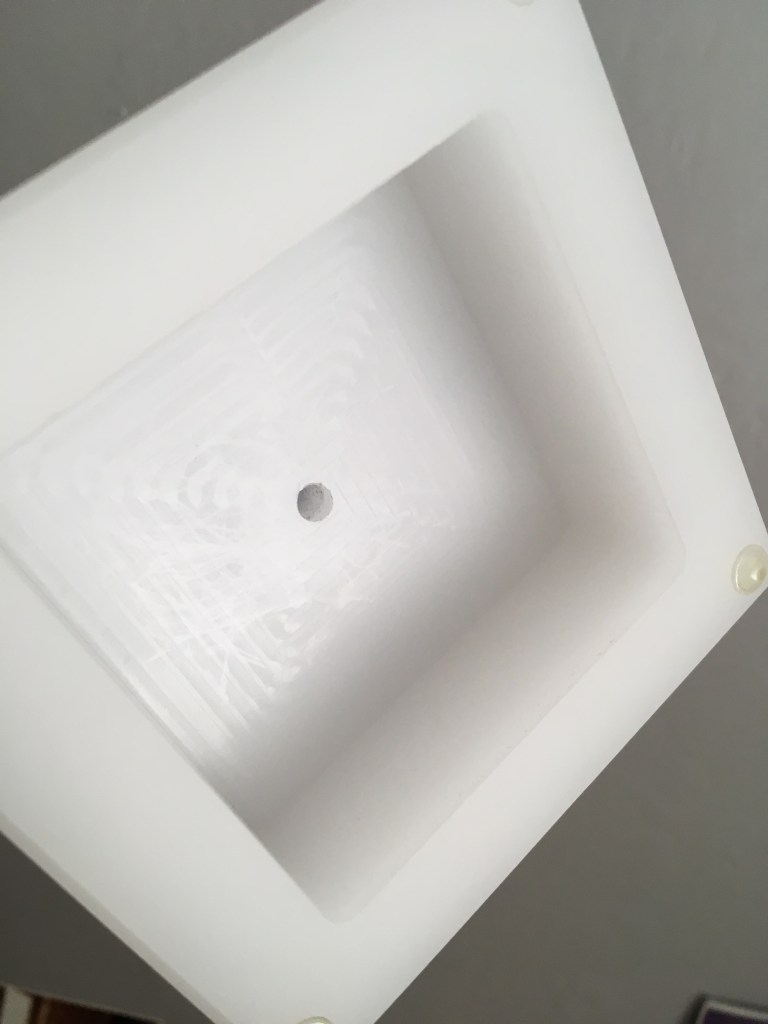
Here is the bottom of the award milled out, and you can see a hole in the center as well.
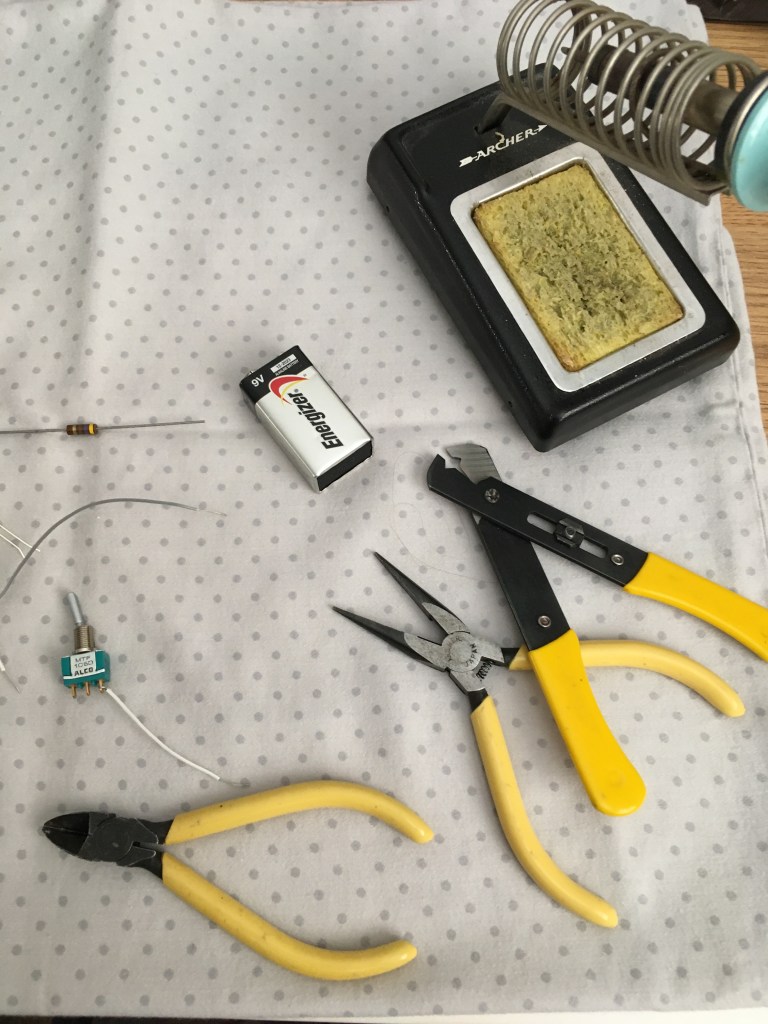
I assembled the needed tools and parts to bring a little more light into the world.
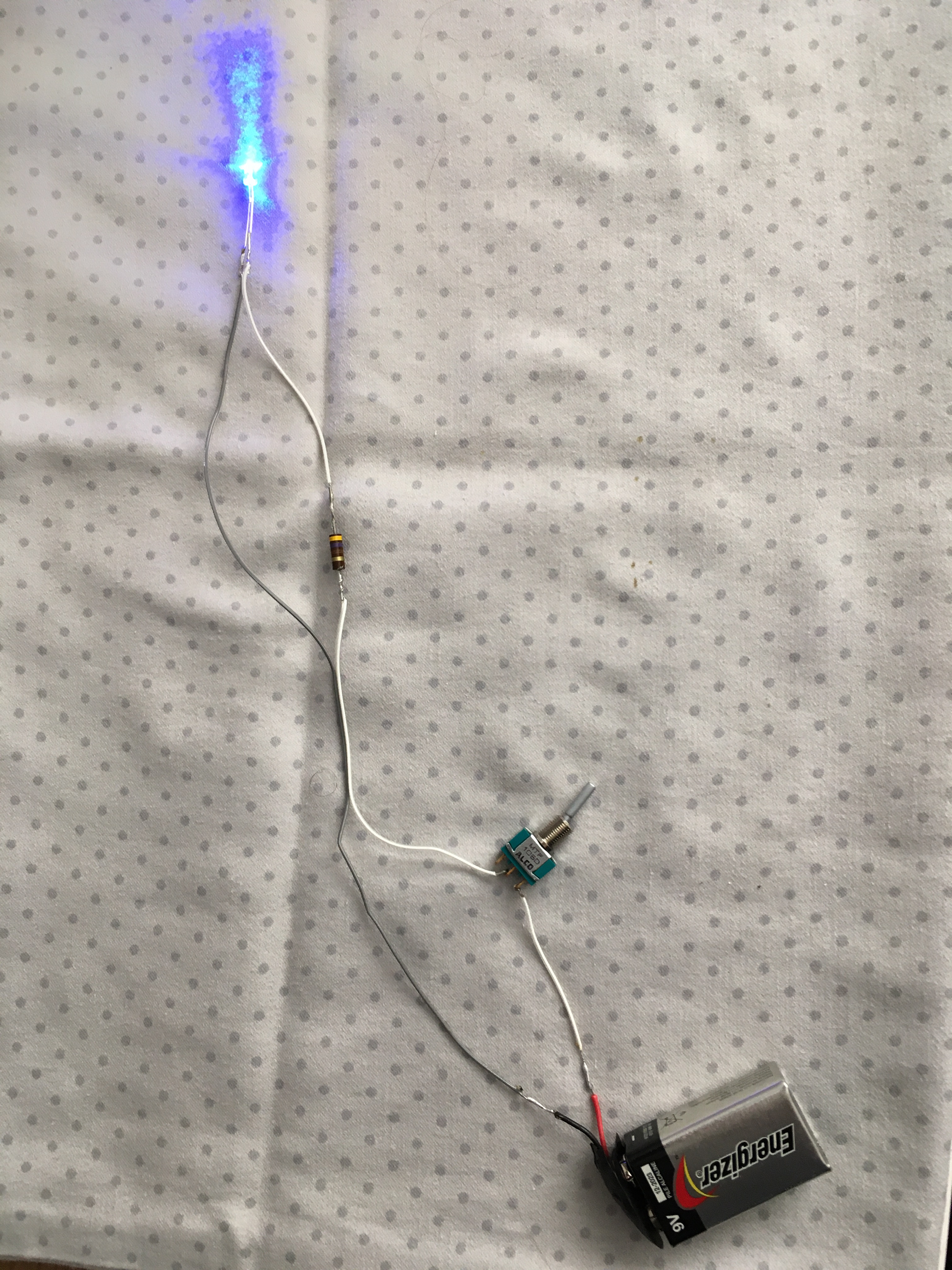
The only parts needed are an LED, a resistor, a switch, some wire and a battery. The LED is a Light Emitting Diode. The resistor limits the current from the battery, preventing the diode from burning out.
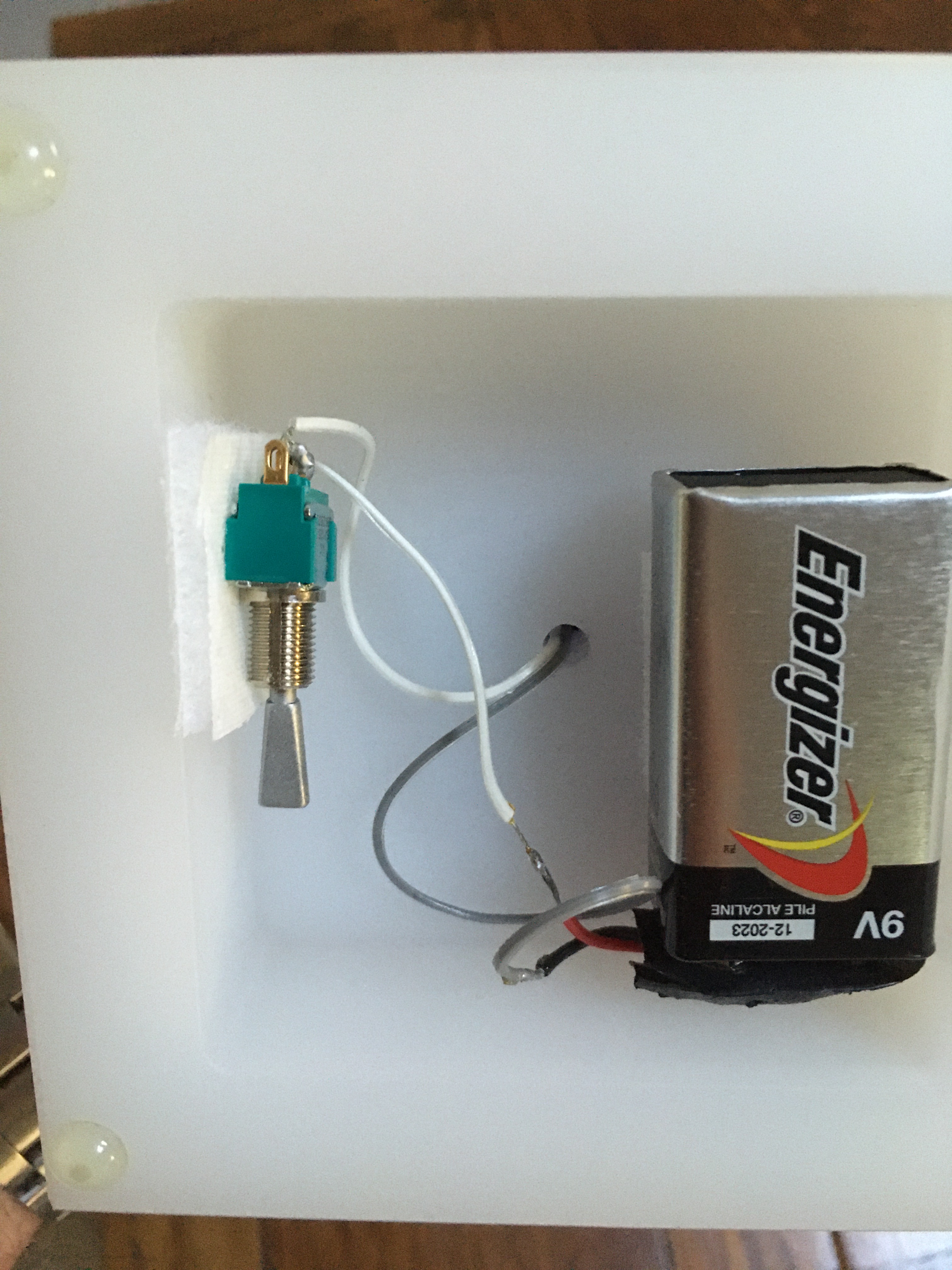
Below is the simple circuit with illuminated LED, and a bottom view showing the parts installed. It was a bit tricky feeding the LED and wires up through the center of the lighthouse, but I was able to get the job done.
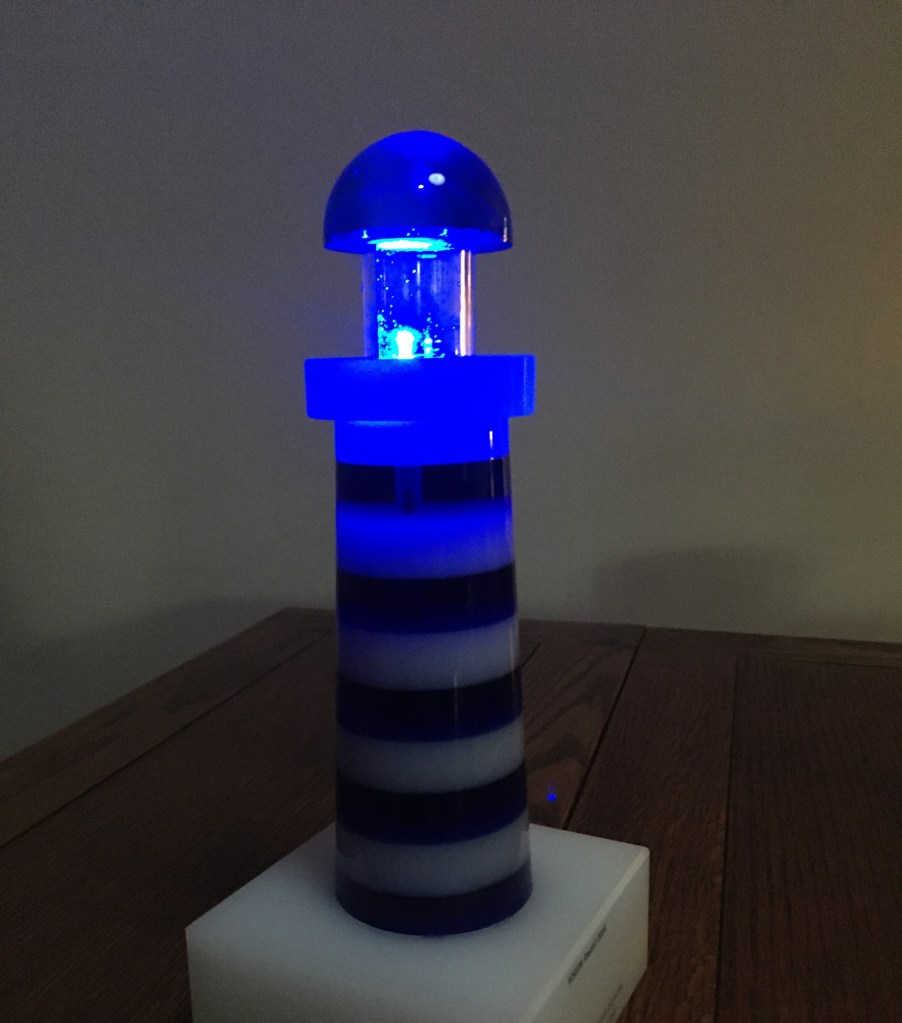
Here is the lighthouse lit up, as it should have been the day it was presented.
Moral: Don’t sit around collecting dust – Go out and seek the light!
News Flash – Man Communicates with Marine Mammals!
North America – Mr. G (of mrgsmind.com) hopes to one day communicate with wolves using electro-mechanical ears fitted onto a headband – Earlingo – The Animal Assisted Therapy Headband, or signal to cuttlefish using a Light Emitting Diode (LED) communication display board – Cuttlefish Comm Board. For now, both hopes are only dreams.
Currently, however, he does use his dreams to communicate with animals, specifically marine mammals. This may sound a bit strange, but not to Mr. G, who has been studying dreams for more than forty years.
Mr. G, who describes himself as a “garage psychologist,” became interested in animal psychology while a college student. After graduation, he worked at the university as a research assistant, caring for and testing the hearing thresholds of California sea lions, under the direction of Dr. Ronald Schusterman.
Since retiring as a support engineer, he has focused his energy on working with animal communication in his dreams. He utilizes several “tools” that he has invented to accomplish his goal.
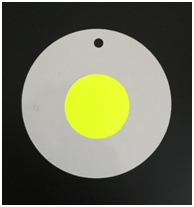
Mr. G spends thirty minutes a day conditioning himself to have animal communication dreams at night, using his Pattern Disc Viewer – Pattern Disc Viewer and a Pattern Disc. In this way, he says that he sets the theme of his dreams, which enables his brain to “manufacture” a specific type of dream. He says that this process can be utilized for any type of dream that one would like to have. One only needs to create the desired Pattern Disc and practice.
Wearing the Pattern Disc Viewer, the Pattern Disc image is viewed and flashed with red LEDs during the day. The disc image is also somewhat “camouflaged” with a pattern over the image. Mr. G says that the brain will quickly store the image in memory, and it will not appear in dreams as often. Disguising the image makes the brain think that it is something new, and it “pops up” in the dream on a regular basis.
Pattern Disc Viewer
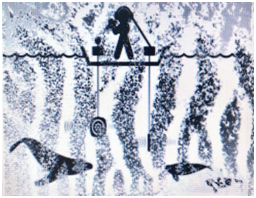
Pattern Disc Image
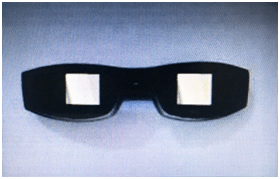
He also spends thirty minutes, three times a week, using his Alpha Generation Glasses – Alpha Brainwave Generation Glasses and/or Alpha Generation Disc – AlphaWAVE Relaxation / Performance Improvement Disk. It has been determined that people who generate more Alpha brain Waves (7 – 12Hz) have more lucid dreams. Both the alpha glasses and the disc create Alpha brain waves with their use. The “Alpha State” is a very pleasurable state of mind, which Mr. G believes could be used to treat Post Traumatic Stress Disorder (PTSD) or to enhance athletic performance.
Lucid dreams, which is where he communicates with the marine mammals, is his ultimate dream state. In a lucid dream, one becomes aware that they are dreaming. Once lucid, the dreamer can control the direction of the dream. In Mr. G’s case, he has conditioned himself to utilize the image of the man (himself) communicating with marine mammals on the Pattern Disc, as the subject matter or theme of his dream. Once lucid, he begins communicating with the mammals. “Crazy he says, but fun.”
Alpha Generation Glasses
Alpha Generation Disc
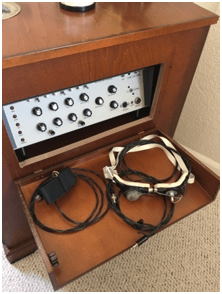
But how is the lucid dream state initiated? Mr. G uses an older device that he invented, with the help of an electrical engineer, Bob W. from Southern California.
The device, which he calls, “The Dream Trainer,” – The Dream Trainer is hidden within a piece of furniture next to his bed. He opens up a side door and the hidden dream trainer becomes accessible for use at night.
The Dream Trainer
The Dream Trainer’s primary mode, although it has several, is to detect Rapid Eye Movement or REM, which occurs at the onset of dreaming.This is accomplished using a motion sensor mounted onto one side of a pair of goggles. On the other side of the goggles is a ring of red LEDs, which will begin to flash over the closed eyelid once REM is detected.
The conditioning of the red LEDs flashing, while viewing the Pattern Disc during the day, now acts as a “cue” when the red LEDs in the goggles flash while dreaming. The result being that Mr. G often becomes alert or lucid in his dream, but not awakened from sleep. Usually, he is already dreaming of marine mammals because of daily conditioning, and begins a conversation.
What do the marine mammals talk about? He said, “Mostly about their day-to-day activities. How they find food, the things they try to avoid, or even the warming of the ocean.”
Mr. G knows that the conversations are really just a manifestation of his own life experiences, but says it is still very exciting to talk with animals in an altered state of consciousness . He says, “It feels like it’s really happening!”
He also knows how important sleep and dreams are to one’s health, energy level and memory development. Therefore, he only wears the dream goggles two nights a week, as it can be disruptive to the sleep cycle.
Why do this at all? Mr. G says, “Mostly because it is fun, but also to learn new things about the brain, memory development, and possibly discover something new that could be helpful to other people.”
He is hopeful that one day that “dream” will become a reality!



 Mr. G's Mind